Asia Rugby Expands Try Together Program 2026-2027
 rugbyasia247
Posted On October 16, 2026
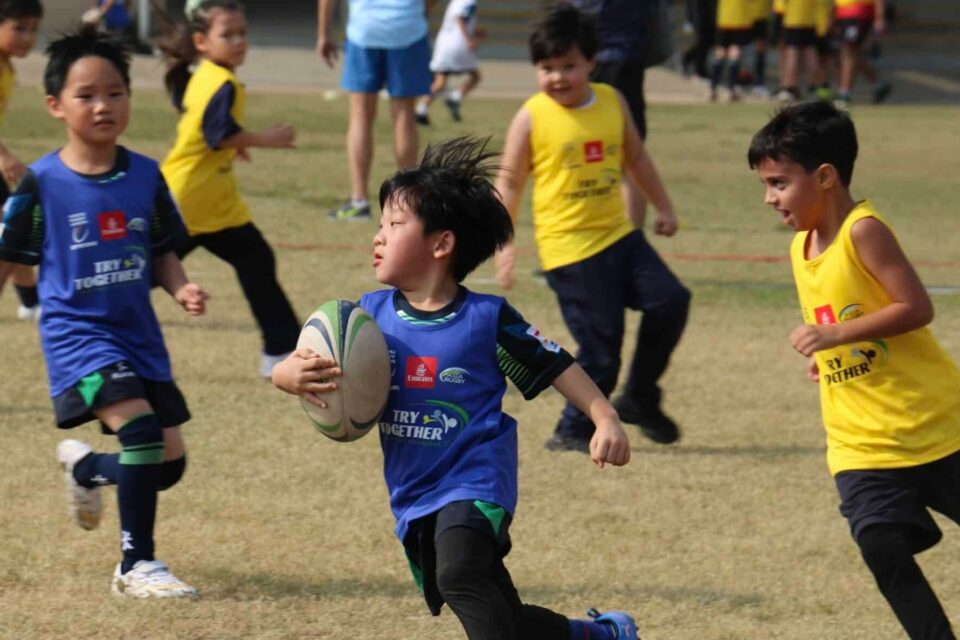
Asia Rugby confirmed it has awarded support to 10 Member Unions under its 2026-2027 Try Together Program to “create new opportunities to grow grassroots rugby and strengthen development pathways across Asia”. But how impactful are these projects?
Photo Credit – Asia Rugby
On 28th June 2025, Asia Rugby officially launched the “Try Together Programme”, which they said was meant to “accelerate rugby development initially across six targeted member unions through structured financial and technical assistance.” These were in Bangladesh, Brunei, Cambodia, Iraq, Kyrgyzstan and Macau.
We dont know a huge amount about the programme and unfortunately need to view it with some scepticism, mainly due to previous ‘development’ programs such as Get Into Rugby being lauded by the governing body, but so many of the metrics used under that program had been panned when assessing real impact and sustainable development of the sport.
The 2026-2027 Try Together programme will support 28 proposed development projects in the following countries:
- Afghanistan
- Bangladesh
- Cambodia
- Jordan
- Lebanon
- Macau
- Nepal
- Palestine
- Sri Lanka
- Syria
No information is provided by Asia Rugby in their press release on how programmes are assessed or approved. They said that the “projects focus on grassroots participation, women’s and girls’ rugby, domestic competitions, training and education, technical workforce development and stronger national rugby pathways.”
Inaugural Try Together Program 2025-2026
The first cycle included 27 planned projects targeting approximately 2,830 direct participants, said Asia Rugby. They cited some examples, including in Bangladesh, where an Under-16 Sevens School Rugby Tournament (16 teams from 11 schools, including 8 boys’ teams 8 eight girls’ teams) competed in Dhaka.
The example in Cambodia raises red flags. We are based here and know well the realities on the ground. Asia Rugby said that the CFR “returned to regional competition after approximately three years, supported through national team preparation and tournament participation.” In reality, a local rugby club (Phnom Penh Social Rugby Club) coached and trained and supplied players alongside Cambodian players for participation at the SEA 7s in Singapore in January; they have hardly trained as a national team since then.
They also said that Macau delivered coaching and refereeing courses and a schools touch competition involving 19 teams, while Brunei ran an IPT Rugby Tournament.
While Asia Rugby says these “initiatives highlight the Program’s reach, from introducing young people to rugby to developing the local workforce needed to sustain the sport”, the same criticisms as the Get Into Rugby remain. One-off financial support for touch, contact, or even youth tournaments with no continuous development does not equate to any long-term progression or development of the sport.
What is Planned for the 2026-2027 Cycle?
Nepal aims to introduce rugby into 35–40 schools, and Sri Lanka plans to strengthen girls’ rugby across seven provinces.
Those are vague goals, and we will wait to see what KPI’s, or measurable monitoring and evaluation, are in place or released. But you also need to look at which unions are being awarded these programmes – they are very much aligned with the current Asia Rugby President politically.
Asia Rugby said that these 2026 programmes will “introduce stronger project planning, accountability and monitoring, with clear Key Performance Indicators covering participation growth, player retention, women’s rugby, workforce education, competition delivery and player welfare” and that unions will track delivery, identify challenges and assess the benefits created by each project.
We certainly hope that’s true and not just empty words on a statement.
Benjamin van Rooyen, Chief Executive Officer of Asia Rugby, said “The expansion to 10 unions reflects our commitment to sustainable development. With clearly defined KPIs, realistic delivery plans and stronger accountability, we want every investment to create measurable and lasting benefits for our Member Unions.”
It should be noted that Van Rooyen was meant to leave his role in 2026, as announced by Asia Rugby, but no statement has been made since, even though he has stayed in his role and looks to remain in his position.
It was confirmed this week that Asia Rugby has officially been reinstated to the World Rugby Council with immediate effect.
Asia Rugby News
- Asian International Rugby Tournaments 2026.
- China’s Wang Yun appointed as Asia Rugby Vice-President.
- JRFU Receives & Acknowledges Long-Overdue Apology from Asia Rugby Over Kensuke Iwabuchi Fiasco.
- Asia Rugby Launches Try Together Development Program With Six Unions.
Trending Now
Asian International Rugby Tournaments 2026