George Gregan and Conrad Smith Explain Why the GRPF Is Filling an Important Void in Professional Rugby
 rugbyasia247
Posted On April 22, 2026
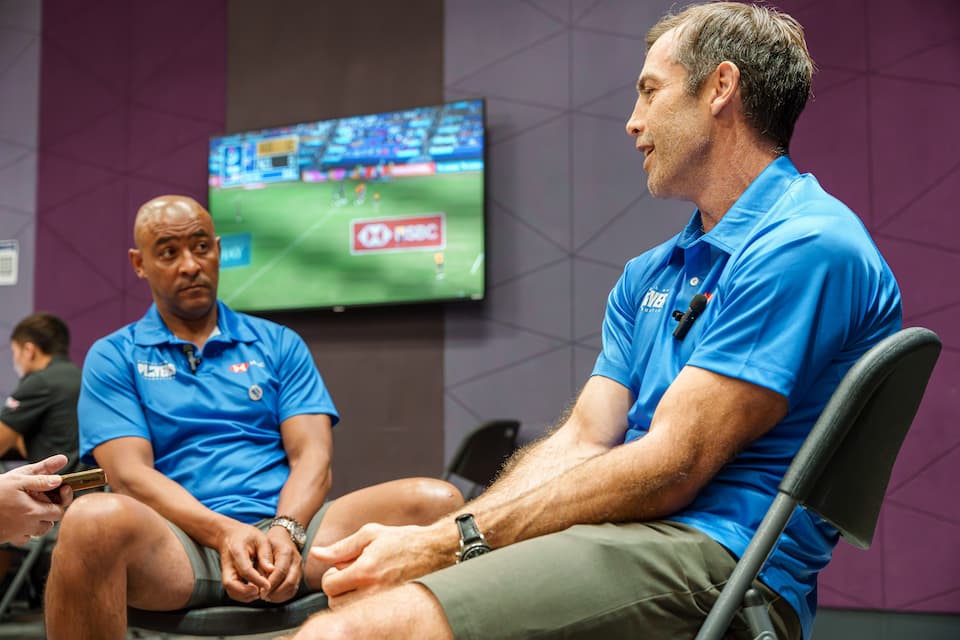
During the Cathay HSBC Hong Kong Sevens 2026 week, the GRPF (Global Rugby Players Foundation) sent an impressive representative team to network and spread the word about what they are doing to support former rugby players with what comes after they stop playing the game professionally.
George Gregan, Rachael Burford, Conrad Smith, and their new CEO, Karina Murtagh, were all in town for the milestone weekend, which gathered some of rugby’s biggest stakeholders in Hong Kong.
We had the time to speak with former Wallabies captain and GRPF ambassador (and Chairman), George Gregan, as well as former All Blacks centre, GRPF co-founder and ambassador Conrad Smith.
Both were speaking at the Cathay/HSBC Hong Kong Sevens, where they appeared as Global Rugby Players Foundation (GRPF) spokespeople and were supported by HSBC, a global partner of GRPF. They have teamed up to support former rugby players by building financial resilience, mental well-being, and second careers for players transitioning out of professional rugby.
With over 90% of players needing a second career post-rugby, and 530+ players already supported via the GRPF in 6 counties across Ireland, New Zealand, the Pacific Islands and South Africa.
How Did They Get Involved With the GRPF – George Gregan and Conrad Smith
Conrad Smith, the two-time Rugby World Cup winner, is one of 11 co-founders of the GRPF. The co-founding group features an incredible array of rugby talent from the women’s and men’s game.
Conrad Smith told us his rugby journey and path into the game were a little bit different. He never made the rugby academy and studied full-time to become a lawyer before becoming one of the most respected and decorated All Blacks of all time.
“I thought, if things didn’t work out in rugby, I was gonna be a lawyer. I was often thinking about things after my career, and I felt fortunate about that. After playing, I wanted to help other guys see it differently, that you don’t need to see rugby as a be-all and end-all when you don’t need to finish your career.”
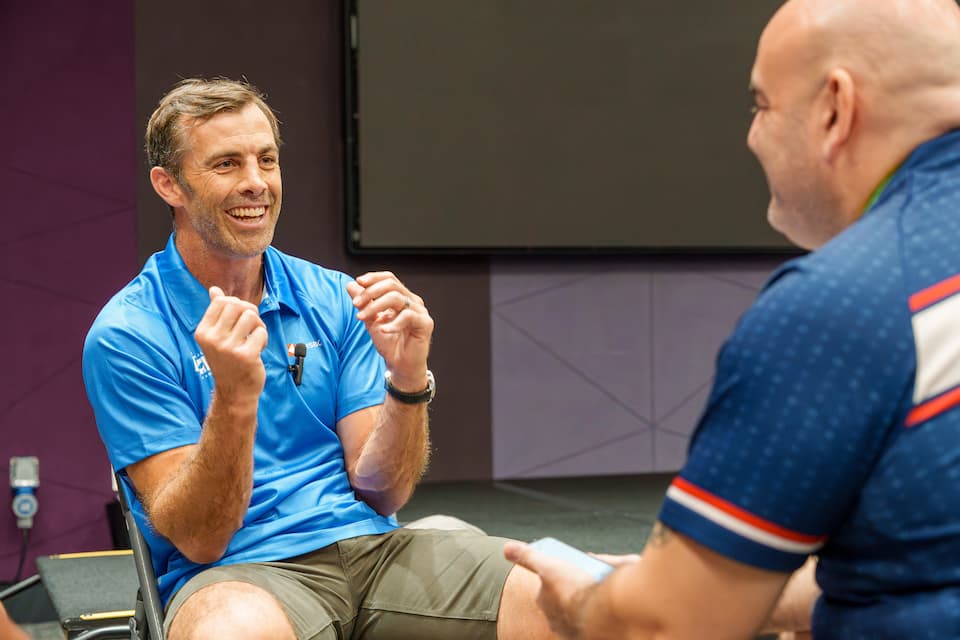
Photo Credit – Rio Kimura
The Kiwi explained, “I worked with the Player Association during my career in New Zealand, and then when I finished playing in France, there was an opportunity to join the International Rugby Players Association and directly deal with World Rugby on issues.
I’ve been with them for three years now, in a sort of more full-time role as Chief of Rugby Operations. It has brought me to Hong Kong, because we get to meet with senior World Rugby management and board members here.
Obviously, the Global Rugby Players Foundation is something that the player associations have a close tie with as they look to support players as they leave the game. It makes sense, as players who work with player associations and receive that support, the idea of the foundation is that support carries on.
I think we see in player associations how important that is, because they actually get a lot of support during their careers, but it’s that step out of the game and into a new life that the GRPF has been set up to sort of service and provide a similar support.
So, I work with the International Rugby Players Association, and I do a lot with the GRPF, and it’s been great.”
George Gregan said he was humbly asked by the founders and through DC (Dan Carter) to be chair.
“I took some time, and I said, “What is it we’re trying to achieve?” And that was the main question. I thought it was a great idea. I think part of why they asked me to do it as well is that I’m probably a lot older than these guys. I started playing rugby in that sort of semi-amateur period, and then rugby went professional in 1996 or so, and I’ve also been retired a lot longer than these guys.
That piece on transitioning and asking, “What do you do after the game?” I said I could help. I had a charity and a foundation previously myself, which was around children, hospitals and playgrounds, so I’ve had that experience.
I think that part of it as well, and it’s been a really rewarding journey, but there’s still a lot of work to do. We’ve got some really good people, and there’s a lot of passion and energy around it.”
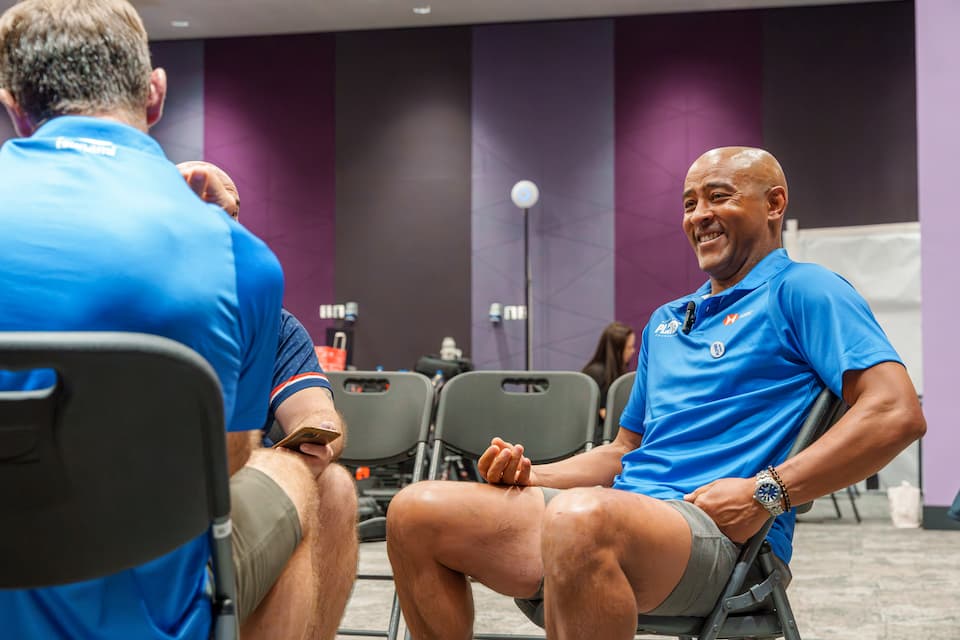
Photo Credit – Rio Kimura
Why Did the Founders Feel a Need to Start the Global Rugby Players Foundation?
Smith explained, “I think in terms of its origins, it was probably from our experiences within player associations. We collectively work really hard to support players during their careers, but then we found this oddity, I suppose, where they then left the game, and that was when they were most in need.
As part of associations, we were sort of restricted to just helping players in the game – that was our sort of mandate. So we knew that wasn’t right. We wanted to help them post-career, but then you have a question of resources, and you’re stretched pretty thin. We knew that wasn’t a problem isolated to New Zealand, Australia, or England. It was a global issue.
As the game got more professional, there was a bigger group of professional players facing the same challenges. We happened to have 11 players based around the world, all seeing this happen to former teammates. And the conversation then goes, “How can we help?” Let’s get a foundation and raise some money. We realised that there needs to be governance and things like that around that, but you want to keep it true to what we talk about being by the players, for the players.
When we set up the GRPF board, which we knew was required, and we needed a chair, let’s find a player. We knew George had done some work in this space, and it’s not something every player can step into. So then it was just a matter of asking the guy.
I’ve said this in the past, like every player we have talked to, we’ve never had a ‘no’ because everyone knows the issue. They’ve been through it themselves. They’ve seen teammates who might have done it tough for a little while, and some for tough for a long time.
That’s why all players have been drawn to this. And now it’s about drawing a wider community, building the support and providing the services globally.”
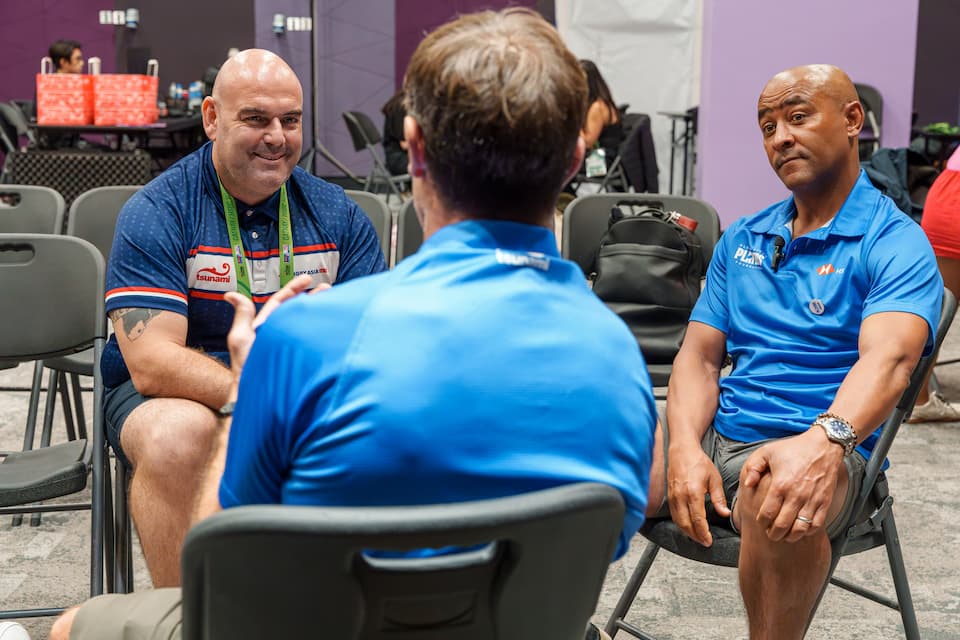
Photo Credit – Rio Kimura
What is the GPRF Trying To Do?
What the GRPF is doing and aiming to do is a just cause for anyone who loves the game. It’s very much a player-centric focus, and the public might not appreciate their work, so what are the key pillars or areas they are trying to focus on in terms of supporting players?
Gregan said, “We are here to spread the word – that’s definitely part of the reason we’re here. We’re here off the back of the support we get from HSBC, one of the inaugural partners for our foundation, to help us support the players.
That step beyond the game, which we’re hearing from the founders, and there are 11 founders, which Conrad humbly didn’t mention he is one of, they spoke amongst each other with the International Rugby Players Association, and went to World Rugby and said, “There’s a void, there’s a gap here. How can we fill it?”
So the foundation’s been set up, and we’re two years into our journey. We’re in six countries now, and with the help of the players’ associations, we are driving programs from the Pacific, New Zealand, Australia, the UK, Ireland, and there’s also South Africa.
The plan over time is to expand that, and you can’t do that unless you have wonderful partners like HSBC and also the rugby community going out and telling us what we need to be doing. That’s what this week’s been about. It’s a bit of explaining to people what we’re about and what we’re trying to achieve, and how we’re supporting players beyond the game. It’s been really well received.
I’m going to Australia after this. We’ve got an event called the Rugby World Cup next year, so we’re going to build up some awareness, but it’s a good piece of work. As you said, Hong Kong, this time of year, this event, and having everyone around rugby, means it’s been a great couple of days for us.”
What Support Does The Global Rugby Players Foundation Offer
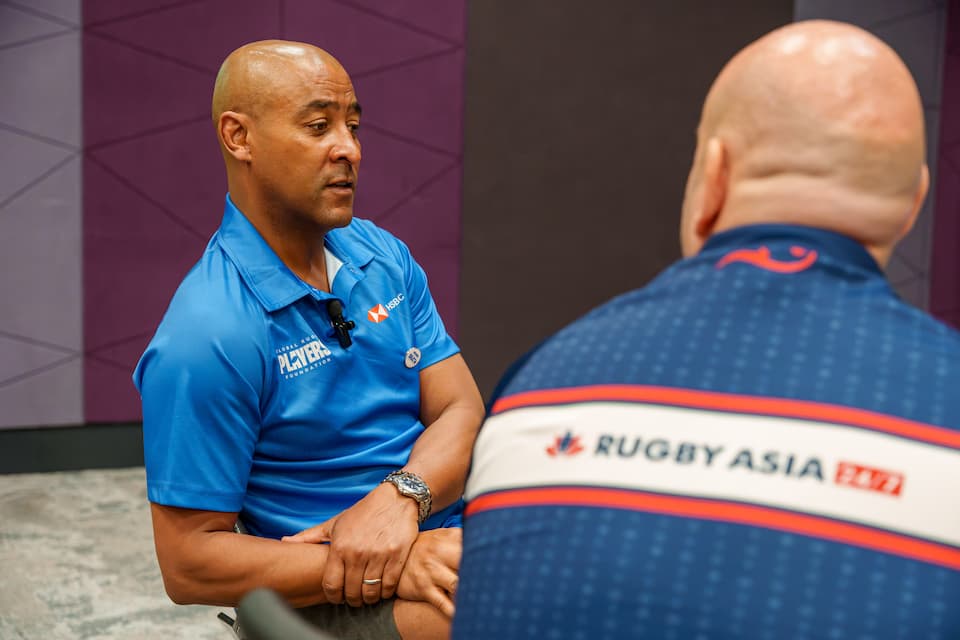
Photo Credit – Rio Kimura
All six countries offer the GRPF services all have different programs – they are tailored for what that market and players need in each region. There are common threads, and they are talking about helping, having conversations and creating a platform and a network for players to talk about some of these issues that they’re talking about in terms of going beyond playing.
That life after rugby component includes the financial and mental health challenges players face in transition, and why support is a necessity, not an afterthought.
Conrad Smith gave an example from where he is most involved, in New Zealand.
“It’s been a matter of opening up who we support. As I said before, originally, the player association was set up to only provide for current players. So now they’ve just taken the step to employ people specifically looking after retired players, and that’s purely been made possible by the foundation
Then it’s how you support them. It’s not handing them money. It’s providing support. It’s providing networking opportunities. Because a lot of the players might have something in mind that they want to do, but they don’t know how to take that step.
It could be education. The reality is, the professional game starts younger and younger, and we’ve missed out on opportunities to get the traditional forms of education. Or it could be direction, as some guys are a little bit lost. It’s not easy when you’ve been absolutely focused and dedicated to a sport, as you have to be to succeed, to then think of what else you’re going to do.
We’d love players to think of that a lot earlier in their career, and that’s what player associations do. But for those that don’t, or are a bit slow to that, I think a lot of direction and support is provided.
Another key element is connection, and actually connecting with players, because you can feel lonely. It might sound strange, but when you’re in a team sport, you have amazing support around you, and you have people who are helping you. You’ve got teammates going through the highs and lows, and that’s the bit that suddenly stops.
As we say at the foundation, it doesn’t have to stop. You’re just in a new team now. You’re in a team of oldies, of retired players that are now facing new challenges, and you’ve got people around here that are going to help.”
Gregan added that the work they do in the Pacific, for example, they’ve had to really focus on financial literacy.
“You’d like to think every player, whilst they’re playing, has that sort of set up. So when they leave the game, they are in a position where they’re personally taken care of, but that can be problematic.
It’s not just the Pacific Islanders. It’s all around, so having those types of programs that support education is really important. And we want to be trying to get players thinking about these things. The day job is a professional rugby player, but the day job will finish. And what are these things that we can provide them with? It could be its connection, its communication, and its tools.
We talk about a toolkit which is going to help you make that transition, and letting them know there’s a lot of your life ahead of you, I think that’s what’s really important. And we’re looking to equip them with the things which can help with that journey.
I think a really important piece as we continue to expand our programs is making sure there’s always that connection, there’s always that sense, and you’re not alone. It’s really important.”
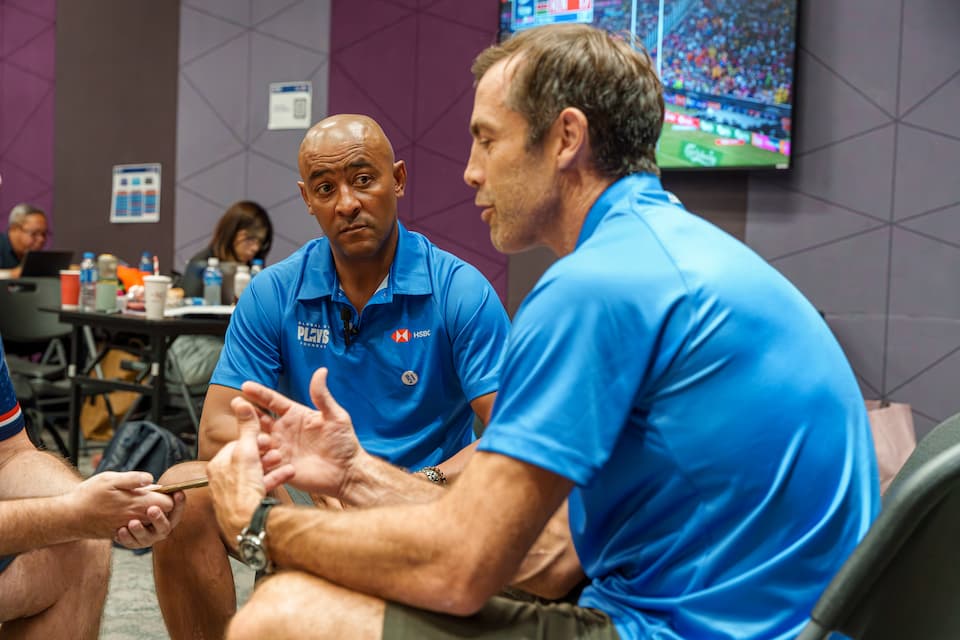
Photo Credit – Rio Kimura
Tackling Mental Health In Rugby
The professionalisation of rugby and the increased scrutiny of players on social media are not aspects that all players had to deal with even a decade ago. So, how is the GRPF assisting with the mental health side of things?
Gregan clarified, “Definitely, that’s a big part of the program. And I think South Africa’s got a really good example of that with their Beyond The Game program.
Ollie le Roux gave a fantastic interview about the impact of that program, like he was being really open and honest and saying he was lost and that he wouldn’t have spoken about it in the past. He said in this environment, he wasn’t alone and that it had such a positive impact on him and the others who were attending for that very reason.
I think that’s really rewarding. We want to hear more of that. It’s fundraising, it’s awareness, so you can support those types of programs with mental health and well-being. It gets spoken about a lot from a board level, from the founders.
We really want to look after each other in that regard. And I think it’s becoming more prevalent, and people are speaking about it more, which I think is really critical. Like it’s not like a badge of honour and being stoic, rather now if you’ve got an issue, you can talk about it, and people can support you. I think it’s critical”
Smith clarified, “As I said, the support isn’t necessarily talking about getting you a job; that might be a byproduct. It’s actually giving you purpose again. It’s giving you connections. And that’s what we know affects your mood, affects your mental health, and that’s what players crave, and it’s not rugby specific. It’s something that is a real challenge as you finish a career and start something that has to be new.”
Global Expansion
Much of what they do hinges on the fact that more players are playing the game professionally. And with players starting younger and even playing until an older age, the new developing marketing introducing professional leagues, and the growth of the women’s game, these issues will become broader.
The HSBC and GRPF partnership looks at how it provides career support, mental health programmes and financial literacy tools across rugby-playing territories worldwide
Conrad Smith explained, “I think that’s why the programs are rolled out through local player associations, because they understand all of what you talked about. There are subtleties within each country of what works. What we’re finding with the programs, what works in the Pacific is different to what works in New Zealand and Ireland, for example.
It’s not an easy job, and that’s why I think the resource component is so important. We’ve been trying to deal with this for a long time, but I share a lot of optimism, genuinely, and I know George is the same. We’re all the same. And as founders, we also want it to be the change.
I have an issue with players finishing and thinking that it’s going to be a hard road, and you’ll never reach the heights of rugby, and that whatever you’re going to do, it’s going to be secondary.
That might be true to an extent in terms of what rugby offers you. But I’m a big believer that rugby players, if you reach top level in the game, you can be a great asset to a business, or charity, whatever you want to put your mind to and put your energy towards, because you’ve achieved something in a really high-pressure environment. And so your next chapter in life can be a great success story – just like your rugby.”
Gregan nodded along. “It’s helping people find that purpose. There are a lot of really impressive skill sets that you have from the environment you’ve been in, which definitely transfer and put you in a really positive position to have a really significant positive impact wherever you go. I think it’s nice for people to hear that as well and showcase how you can do that.”
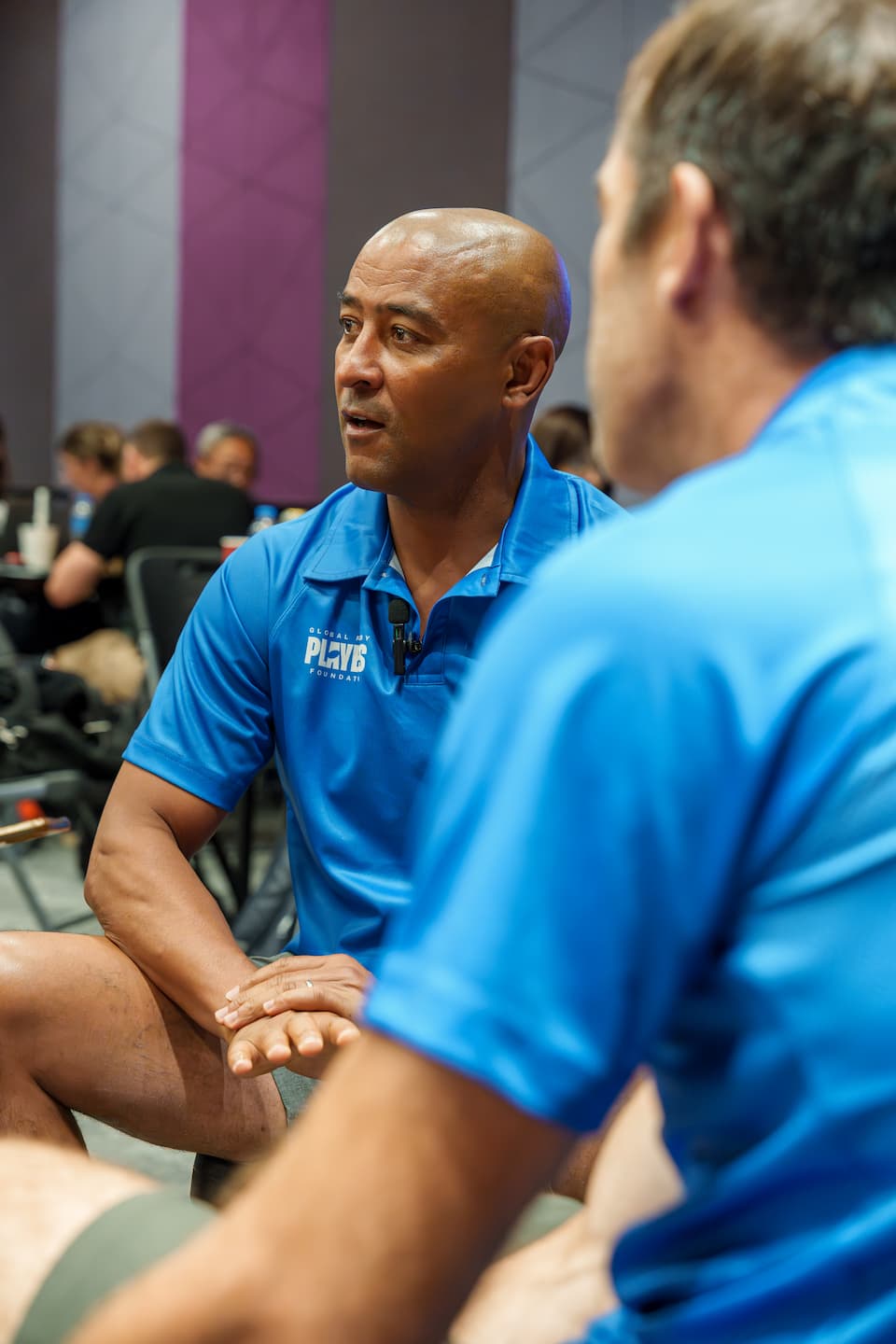
Photo Credit – Rio Kimura – George Gregan, GRPF Chair and ambassador in Hong Kong
We asked about expanding in Asia, where Japan and Hong Kong China have professional programmes, but more semi-pro and pro opportunities are being talked about.
Conrad Smith said, “The growth they are experiencing in the JRLO and it’s probably as good as any around the world. There’s a player association there in Japan. It’s in its infancy, but Hong Kong China is in the process of setting one up. So, I think the provision of support in Japan will be interesting around the company ownership of a lot of teams and the subtleties of how it will have to be tailored to that, but absolutely that they will, there will be a need there. We know that.
The goal of the foundation is to keep growing and expanding. And because we know there’s a need, we have got to keep the resource catching up with the needs, and that’ll be the goal in the years to come.”
Their Favourite Moments So Far Working with the GRPF?
The former Wallaby captain and Rugby World Cup winner said, “As a player, I was always thinking, it will finish one day, and what will I do next? You meet some wonderful people through rugby, and there are other opportunities. That’s one thing that I think of when we speak about the foundation, and when we speak with the founders, a lot is getting people to lean into that aspect of our game. There are lots of those people who might be former players, but they support rugby and want to help.
The actual impact the programs are having, and hearing from the Players Association and the players who’ve been impacted by it, I think that’s amazing. We want to do more of this, but this is what we’re doing now, and here’s the impact it’s having, which I think is pretty impactful.”
Conrad Smith added, “I reckon there are a lot of players that actually transition really well, but don’t get spoken about as much. We need to be trumpeting the good stories, because we often hear about the reverse or the inverse and where they don’t do so well. Sometimes it’s a bit of luck, but they land on their feet, and they do great things after they play. And we just want to see more stories like that.”
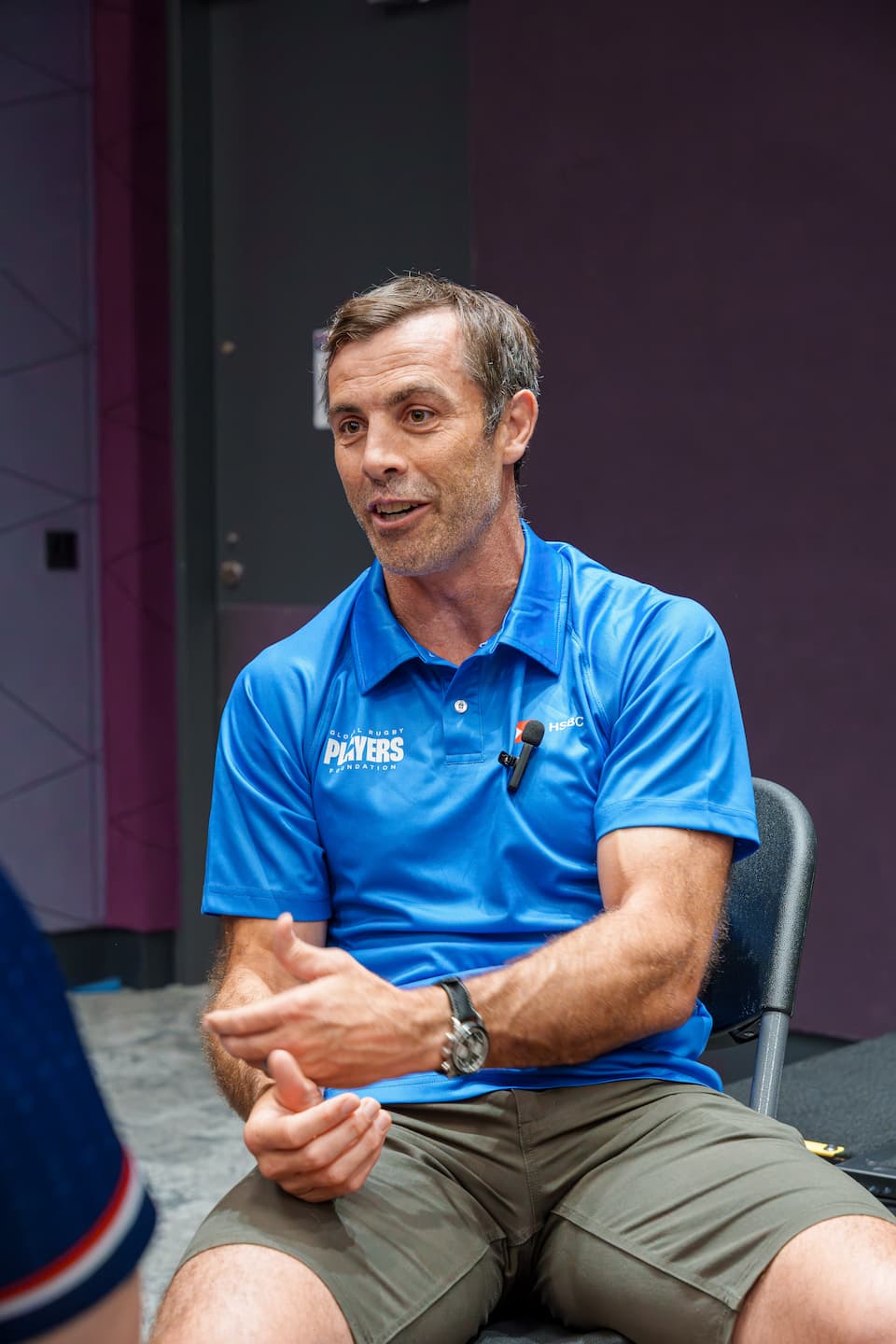
Photo Credit – Rio Kimura – Conrad Smith – GRPF Co-founder and Ambassador in Hong Kong
Rugby Development News
- WXV Global Series Challenger 2026 To Be Hosted in Hong Kong.
- Hong Kong China Rugby Announces Women’s XV Coaching Setup for Asia Rugby Emirates Women’s Championship 2026.
- World Rugby Releases ‘A Blueprint for Growth’ 2026 Report – Aims To Unlock Commercial Potential of Women’s Rugby.
- Rugby For Good Partners With Cathay as a 2026 Community Partner.
Trending Now

Asian International Rugby Tournaments 2026